


The Birth of the Tetsubin Pt.1
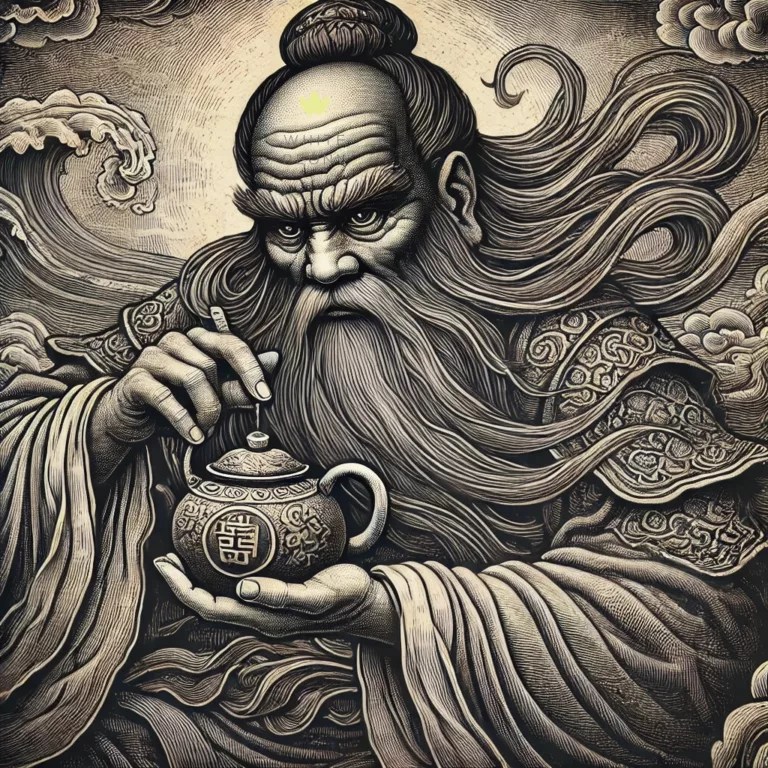
In the waning years of the Sengoku era, when villages smoldered and warlords measured their fates against the edge of the sword, there stood a mountain known only to ascetics and iron-smiths. It was said that the mountain breathed, not with wind but with the slow exhalations of the earth, carrying the scent of moss and iron from deep within its caverns. At its foot lived a reclusive caster whose hands held more memory than the scrolls of scholars and whose ironwork was known only to monks and wanderers.
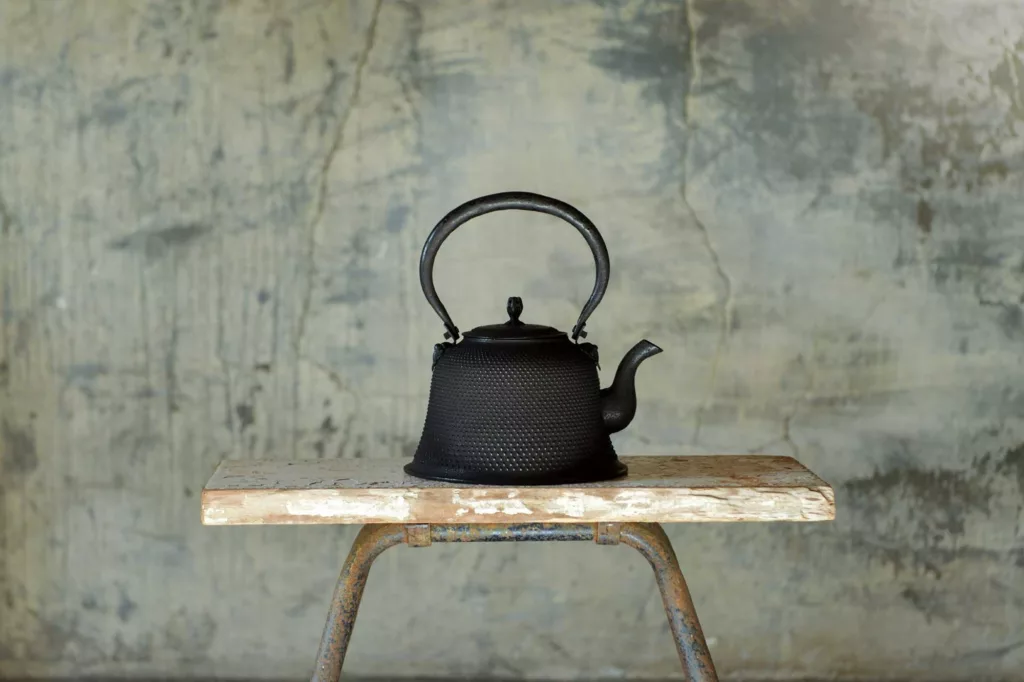
This caster was the last heir of an unbroken lineage of artisans who believed that iron was a living spirit trapped beneath the ground. It was whispered that every vein of ore carried its own temperament. Some were gentle like morning dew, others wild like storm tides. The caster would spend days listening to stones, waiting for the one whose temperament aligned with the water of the human heart. Those who watched from afar claimed that he seemed to converse with the mountain through silence and breath.
One autumn, a wandering monk arrived at the forge. He carried no possessions except a gourd of spring water taken from a shrine hidden among sakura trees. The water was unusually clear, as if lit from within by some quiet lantern. The monk placed the gourd before the caster with a bow so slow and deep it resembled the bending of a bamboo stalk under snow. The caster understood without words that the monk was searching for a vessel worthy of this water, which had flowed for centuries untouched by war.
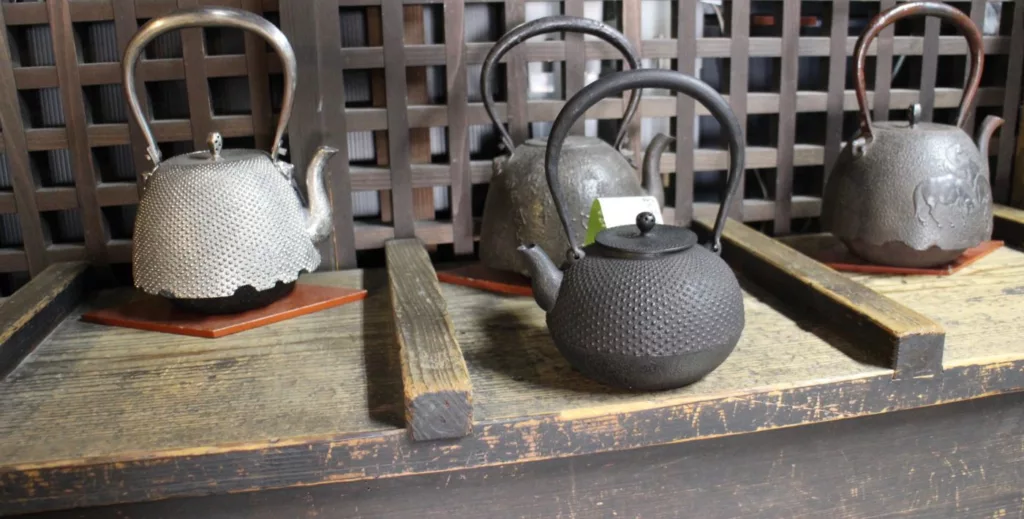
Moved by the purity of the request, the caster traveled deep into the breathing mountain. It was said that the earth recognized him, for the cavern walls shimmered faintly as he passed. He followed a faint vibration through the stone until he reached a seam of iron ore unlike any he had seen. It hummed softly, as if in meditation. The caster gathered the ore with reverence, knowing that its spirit was aligned with stillness itself.
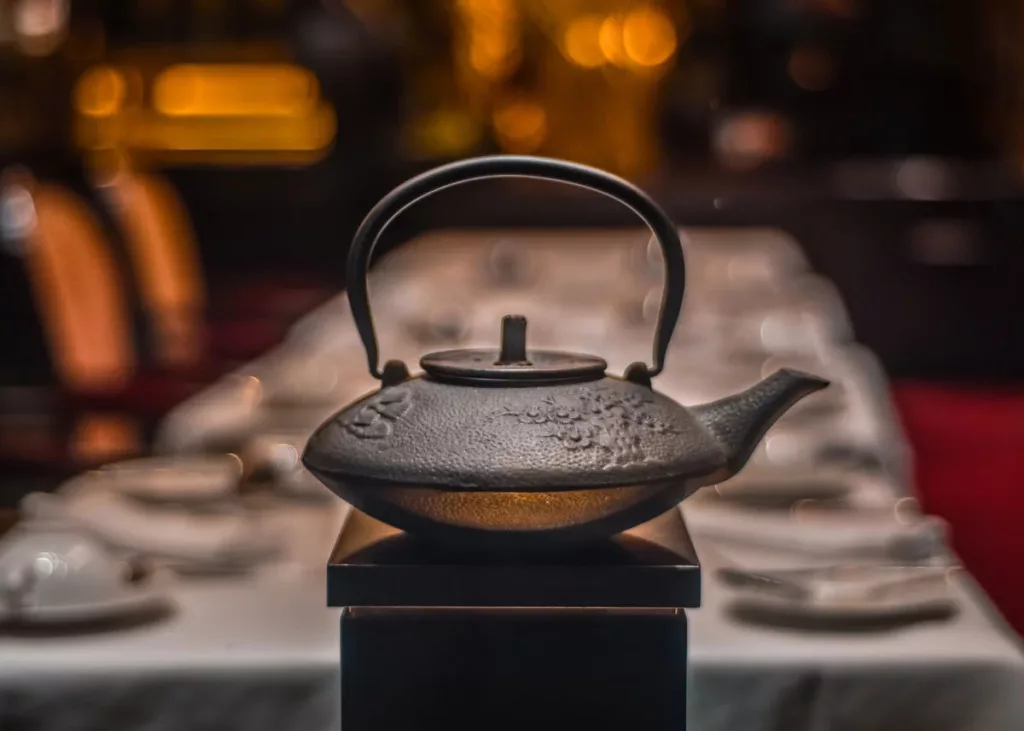
He worked for many weeks, guided only by the rhythm of the mountain’s breath. The iron resisted the heat at first, then softened as though surrendering its former shape. Under the caster’s hands, it stretched and curved, forming a vessel round like a full moon and textured with tiny raised marks resembling falling hail. These marks held the memory of rainstorms, symbolizing the unity of sky and earth. When the kettle cooled, it bore within it a subtle resonance, neither bell-like nor dull, but something akin to a heartbeat.
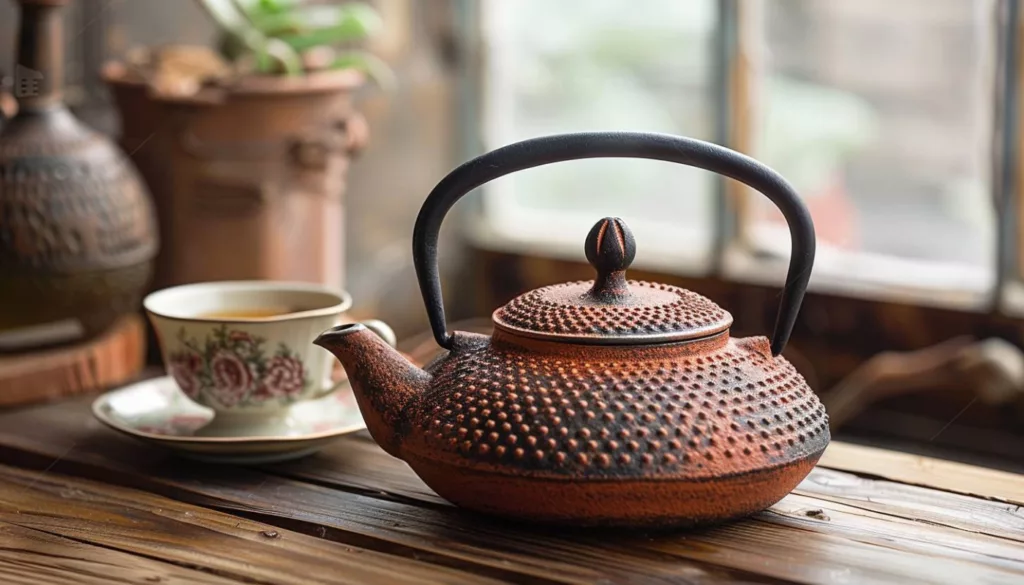
The monk returned for the kettle when winter cloaked the mountain in silence. He carried the gourd of shrine water to the summit and performed a ritual of unbroken stillness. He poured the water into the kettle and warmed it over charcoal. Those who later heard the tale claimed that the water transformed as it heated, becoming softer, sweeter, filled with an indescribable calmness. Some legends go further, saying that the first steam rising from the kettle carried the shape of a white dragon ascending through the cold air.
The kettle became known as the Iron Vessel of Ten Thousand Breaths. It was said that the water inside it always tasted of clarity, no matter the source. Warriors claimed it softened the turbulence of the mind. Poets believed it revealed the hidden syllables of silence. Monks used it in meditation halls to remind disciples that transformation began with patience and heat.
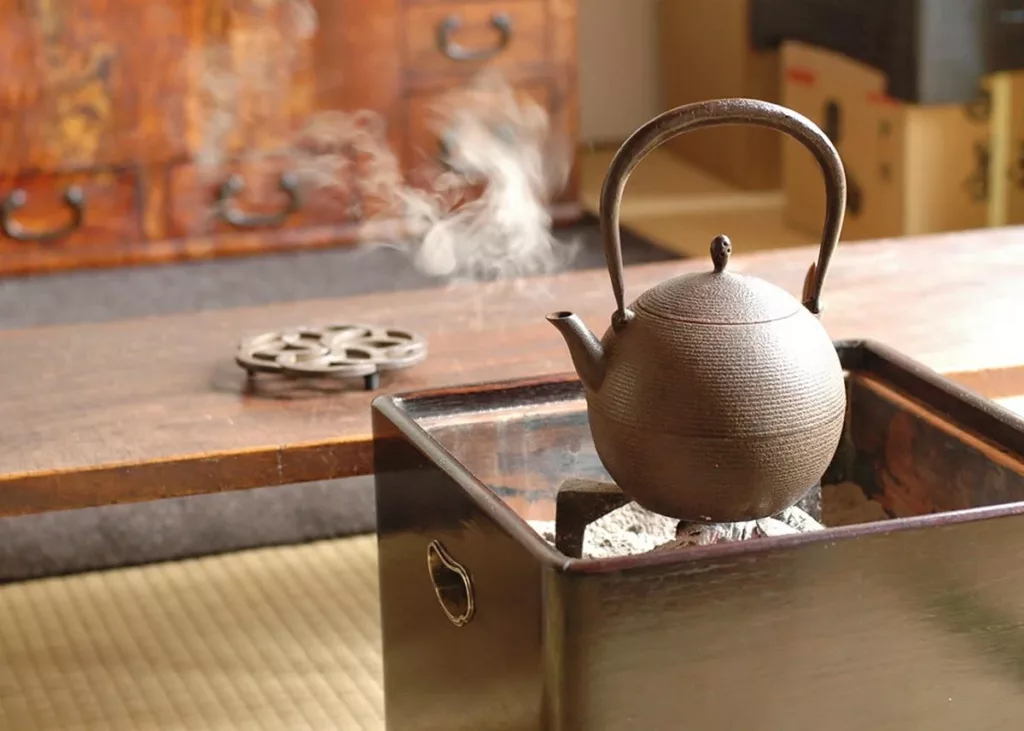
Over the years, the kettle passed from hand to hand. Every owner added traces of their spirit to it, yet none diminished its calm resonance. Some insisted that the kettle remained warm long after the fire died, as if its iron still remembered the mountain’s inner breath. Eventually, the kettle vanished from recorded history, swallowed by war or time, though some say it remains hidden in a forgotten temple where the air still smells faintly of moss and iron.
To this day, tetsubin crafted in the old style carry echoes of that legend. Artisans claim that if iron is listened to properly, it reveals the shape it wishes to become. Tea masters insist that water heated in such a kettle carries a softness that cannot be explained. And across Japan’s misted mountains, wanderers sometimes feel a quiet pulse in the earth and wonder whether the breathing mountain still watches over its iron-born child.




 English
  Czech
Czech  German