

The Making of Tea Series Pt.3
Foreword from the Author
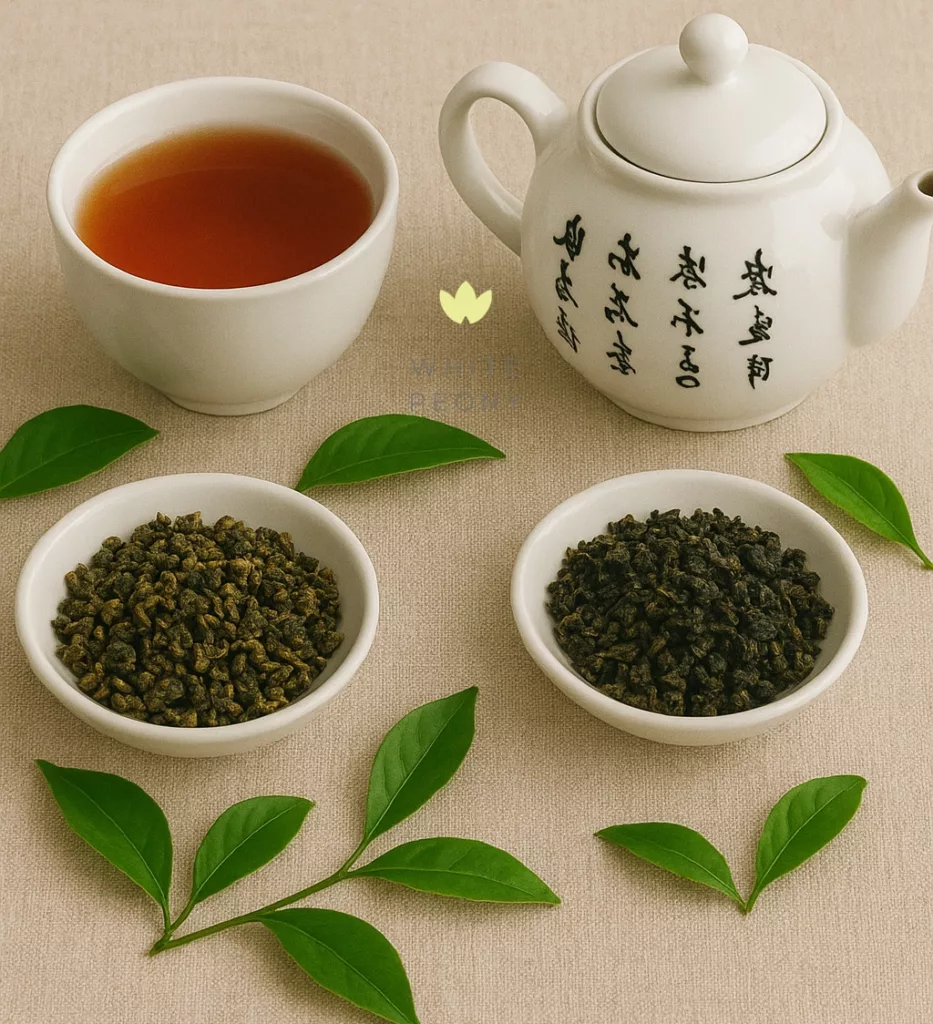
Oolong tea lives in the beautiful space between green and red tea — neither fully oxidised nor untouched. For me, it is the category with the most artistic expression, where craftsmanship matters more than machinery. This article explores why oolong remains the most complex and aromatically rich tea on earth.
What Leaves Are Used
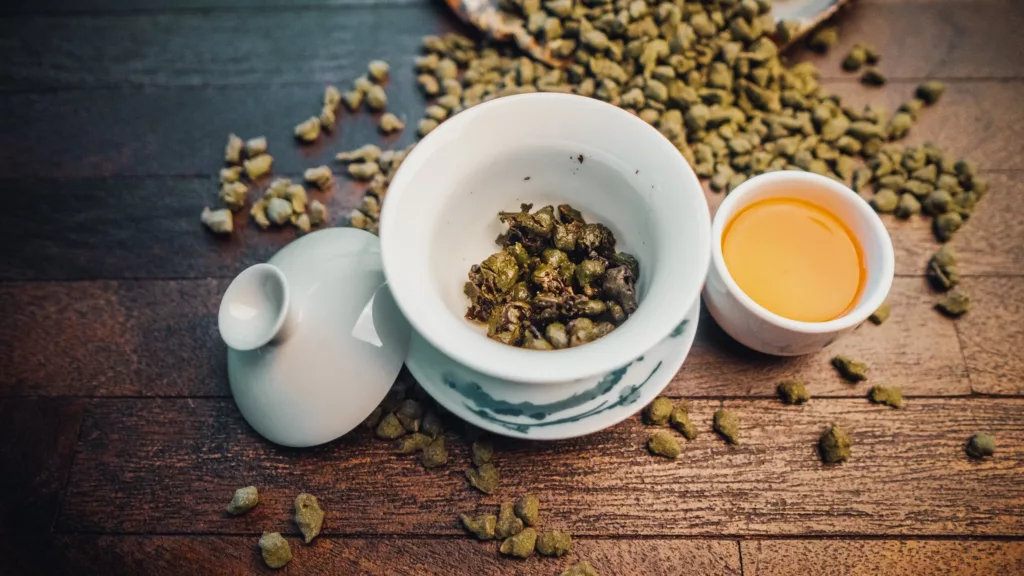
Oolongs use mature, thick leaves from cultivars selected for fragrance and processing strength.
Famous cultivars include:
- Qingxin, Ruan Zhi, Golden Lily (Jin Xuan),
- Da Hong Pao cultivars,
- Tie Guan Yin varietals.
These leaves can handle the long, multi-step processing without breaking down.
Steps of Production
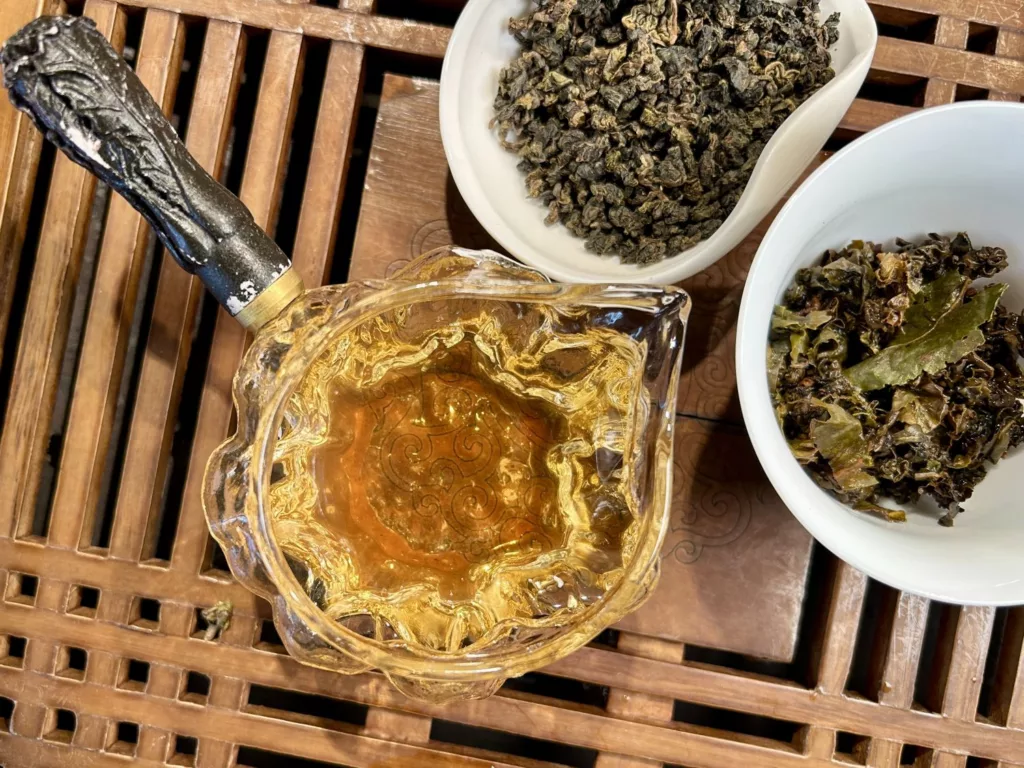
- Withering (Sun + Indoor) — removes moisture and softens the leaf.
- Shaking / Bruising (Yao Qing) — the essential step; the leaves are gently tumbled to trigger partial oxidation.
- Resting Cycles — oxidative enzymes gradually work through the leaf.
- Fixing (Kill-green) — halts oxidation at the desired level.
- Rolling or Balling — depending on regional style.
- Drying / Baking — stabilises the final aroma.
- Roasting (optional) — high mountain oolongs are lightly roasted; rock oolongs often heavily roasted.
Oolongs vary from 10% oxidation (green oolongs) to 80% (dark oolongs).
Aging Process
Oolongs age beautifully when:
- lightly roasted and re-baked every few years,
- or heavily roasted and then stored in clay jars.
Aged oolongs (10–30 years) develop plum, herbal, and incense-like notes.
Taste
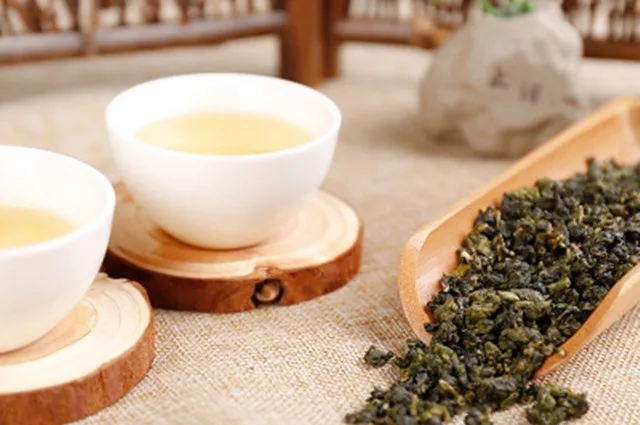
Oolong tea offers the widest flavour spectrum of all teas:
- floral (orchid, lilac),
- creamy,
- fruity (peach, apricot),
- woodsy,
- roasted,
- mineral (Yan Yun) in rock teas.
Health Effects
Oolong supports metabolism, stabilises blood sugar, and aids digestion. The partial oxidation makes it gentle, aromatic, and rich in beneficial polyphenols.

 English
  Czech
Czech  German