


The Birth of the Tetsubin Pt.2
Beloved by chefs, tea professionals and home enthusiasts alike, cast iron cookware has earned a loyal global following. Among the many shapes and traditions—Dutch ovens, pans, kettles and molds—one object stands apart for tea drinkers: the Japanese cast iron teapot. For hundreds of years, this vessel has symbolized craftsmanship, longevity and mindful ritual. Today, as more people seek intentional, slower living, the tetsubin has become an icon of both heritage and harmony.
At White Peony Tea Co., we value the way thoughtful tools enhance the experience of high-quality tea. The Japanese cast iron teapot is one of those tools: deceptively simple, meticulously crafted, and made not for brewing tea leaves, but for perfecting water—the foundation of every great cup.
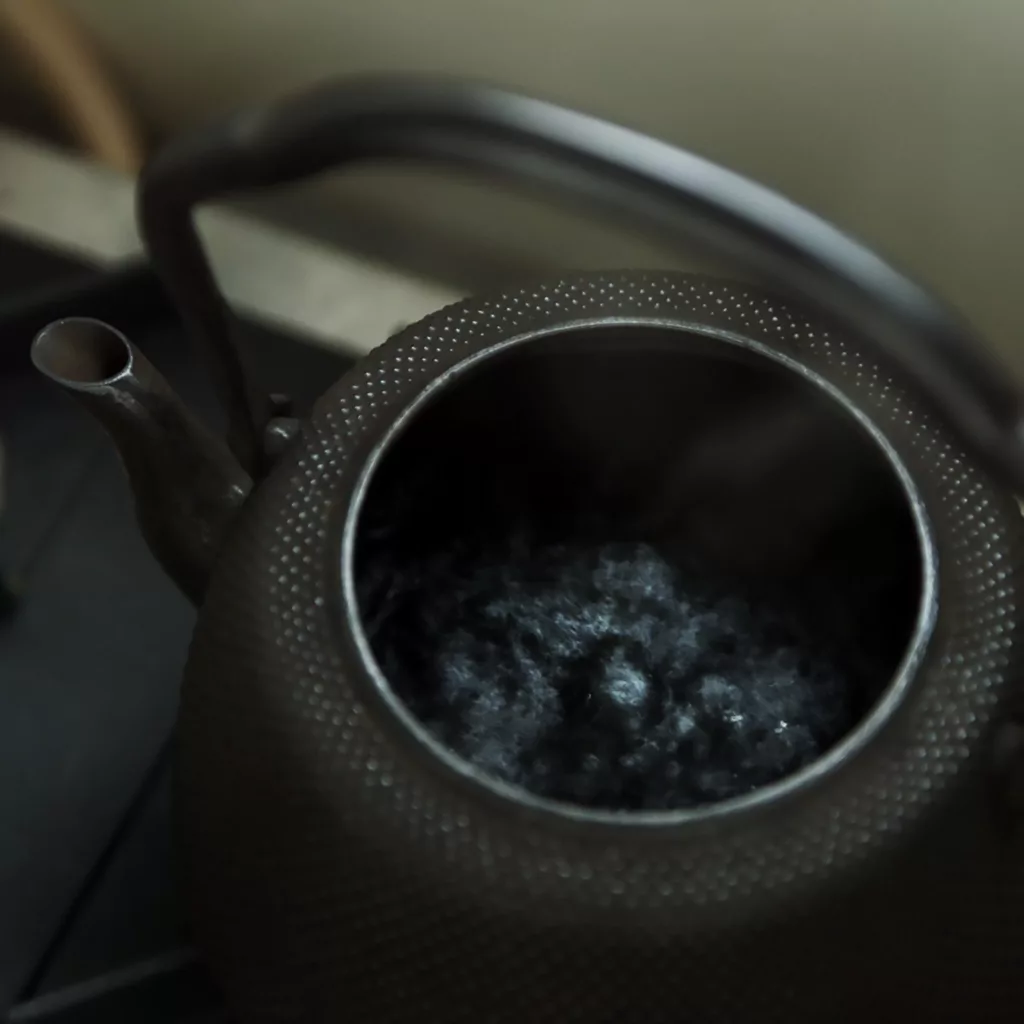
A Short History of the Tetsubin
The Japanese cast iron kettle for tea—tetsu-kyusu—originated in the 17th century and was traditionally crafted in Morioka and Mizusawa, both located in the Iwate prefecture. These kettles belong to the celebrated category of Nambu Tekki ironware, a craft lineage that reaches back to the Sengoku period (1467–1600).
Even today, authentic tetsubin are almost exclusively made in Iwate by artisans who train for a decade before earning recognition as master craftsmen. Production has always remained small-scale, making each piece as much an artisanal object as a practical kettle.
Tetsubin rose to widespread domestic popularity in the 18th–19th centuries, with designs ranging from minimalist to richly decorated, featuring relief patterns, gold or bronze inlays, and lacquered accents. Some of these historical pieces now sit in museum collections.
In the 1990s, workshops began developing versions specifically for Western markets, introducing colored finishes and modern silhouettes. Yet the traditional black or charcoal tetsubin remains the timeless choice for serious tea drinkers.
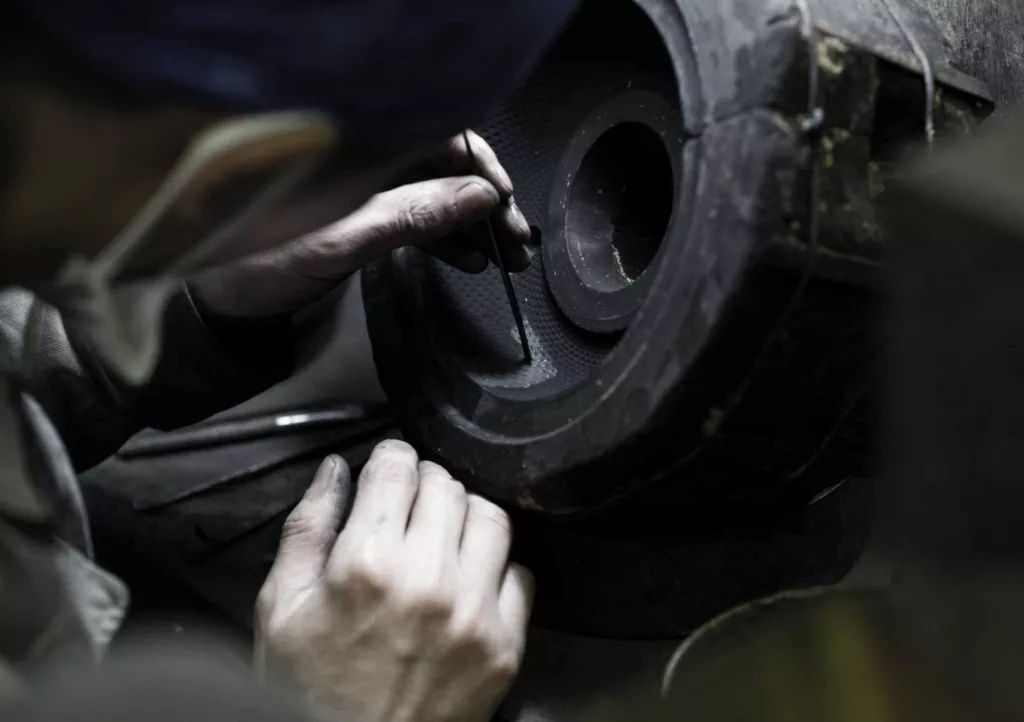
What Makes the Tetsubin Unique
Each tetsu-kyusu has its own character. Differences in the ore, casting method, porosity and traditional firing give each kettle a unique influence on water taste. The thick iron walls also retain heat exceptionally well, keeping the water warm for longer.
More importantly, using a tetsubin transforms tea preparation into a slow ritual. Filling the kettle, heating it gently, waiting as the water softens—it becomes a practice in mindfulness, a quiet pause in the day. The kettle itself becomes a companion, aging gracefully and developing personality over time.
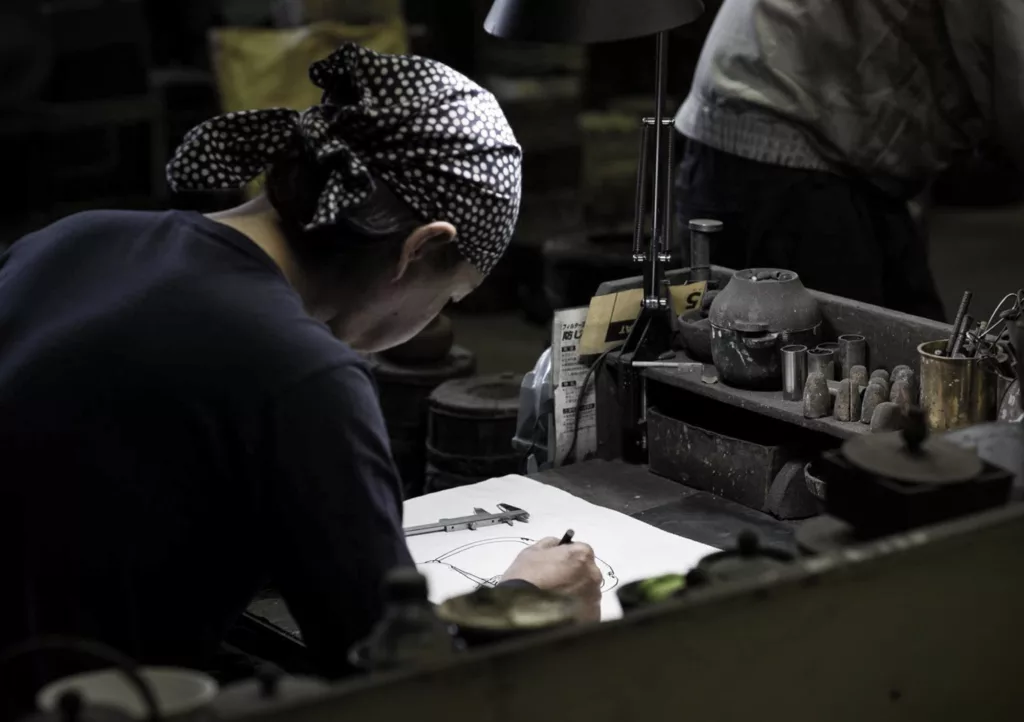
How a Tetsubin Is Crafted
Crafting a tetsubin by hand takes about a week and involves many stages:
1. Molds
Artisans create sand, clay or dry molds by hand.
Clay molds are used for premium kettles; sand molds for everyday-use pieces.
Patterns such as:
- Arare (hailstone dots)
- Hada (skin-like texture)
- floral or animal motifs
…are shaped entirely by hand.
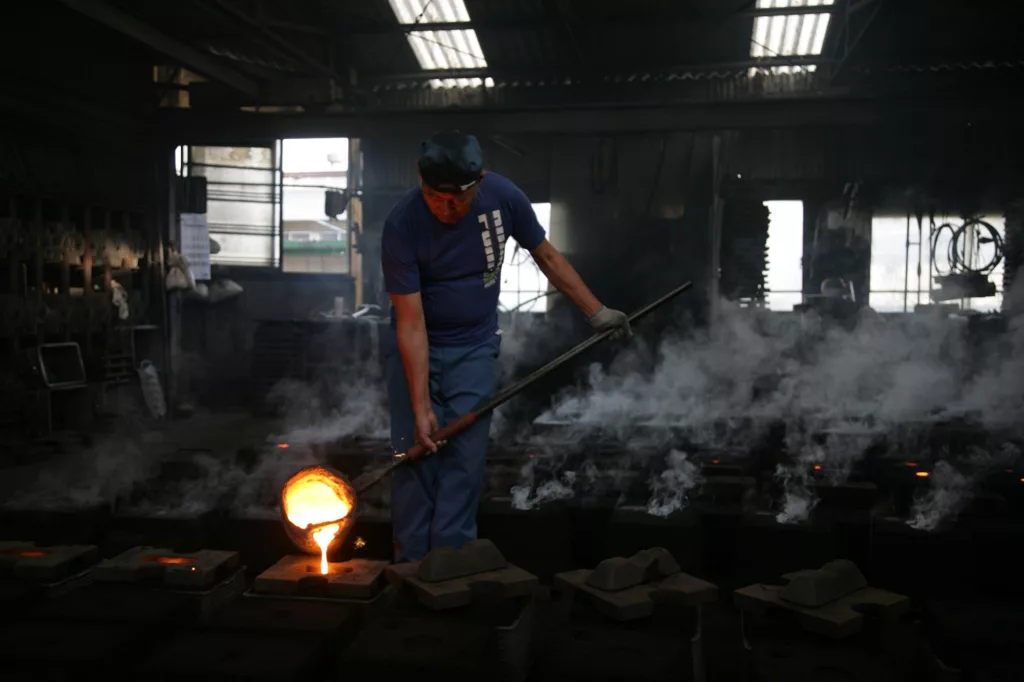
2. Casting
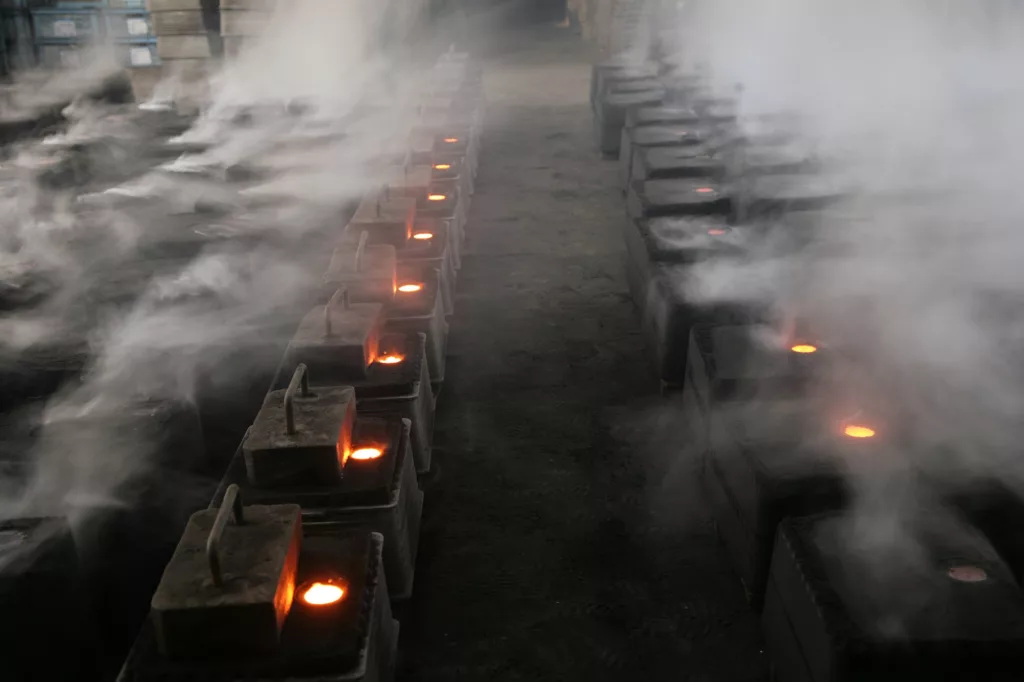
Molten iron is poured into the prepared molds. Each kettle requires multiple molds: inner, outer, spout, lid, and knob.
Handles are forged separately, designed not to overheat—even when the kettle is boiling.
3. Charcoal Firing
After cooling, the raw kettle is heated over charcoal. This crucial step removes surface oxygen, activating the iron and giving the kettle a porous structure that modifies water chemistry. The kettle turns a blue-gray hue during this transformation.
4. Lacquer Finish
A thin layer of urushi (natural lacquer from the lacquer tree) is applied and polished. This creates contrast between matte surfaces and glossy accents while protecting the iron.
Modern workshops preserve this traditional process while occasionally integrating electric furnaces to streamline casting—yet the artisanal essence remains unchanged.
How to Use a Japanese Cast Iron Teapot Properly
A few simple rules keep a tetsubin healthy for decades:
1. First Use
Boil water several times and discard it to remove any new-iron scent.
If needed, boil water with a handful of tea leaves or ginger.
2. Never Heat an Empty Kettle
Doing so may cause cracks.
3. Avoid Sudden Temperature Shock
When preparing multiple batches, leave some hot water inside before adding cold water.
4. Heating Sources
- Gas stove: ideal
- Induction stove: use low heat
- Never use high heat on induction—cast iron may turn brittle
Water vapor from stoves may cause exterior rust—normal and harmless. It can be removed with green tea and a soft cloth.
5. Don’t Store Water Inside
Always empty and dry the kettle after use to prevent interior rust.
Maintenance
All tetsubin develop natural mineral spots inside—white and red—over time. These should never be removed; they protect the kettle and improve water taste.
Rust is normal and safe.
However, heavy rust buildup should be removed to extend the kettle’s lifespan.
To clean rust:
- Boil green tea or oolong tea in the kettle
- Let it cool overnight
- Rinse gently
This darkens and stabilizes the interior.
Do not use:
- detergents
- abrasive sponges
- metal brushes
Exterior rust can be removed with green tea and a soft cloth, which also refreshes the lacquer’s shine.
With proper care, a tetsubin becomes an heirloom, passed from one generation to the next.
What is a Japanese cast iron called?
A tetsubin is the traditional Japanese cast iron kettle for boiling water.
A tetsu-kyusu is a cast iron teapot with an enamel interior—meant for brewing, not boiling water.
Do Japanese people use cast iron teapots?
Yes. Tetsubin have been used since the 17th century and are still crafted in Iwate using traditional methods.
Are cast iron teapots healthy?
Absolutely. They are non-toxic and contribute trace iron to the water.
Is a cast iron teapot good for tea?
For many tea lovers, it is the gold standard. The softened water creates smoother, sweeter, more aromatic tea.
How do I clean it?
Rinse with warm water, dry thoroughly, and avoid detergents.
What size should I choose?
Common sizes range from 0, 4 liters (perfect for 4–5 cups) to larger kettles for tea sessions or gatherings.

 German
  English
  Czech
Czech