


The Making of Tea Series pt.2
Vorwort des Autors
Red tea, known in the West as black tea, is a story of transformation — the leaf’s complete surrender to oxidation. It is the most robust, bold, and widely consumed tea category in the world. In this article I look at how full oxidation creates its signature depth, warmth, and rich aroma.
Welche Blätter werden verwendet?
Red tea uses a broader range of leaf grades than green or white tea.
Producers choose:
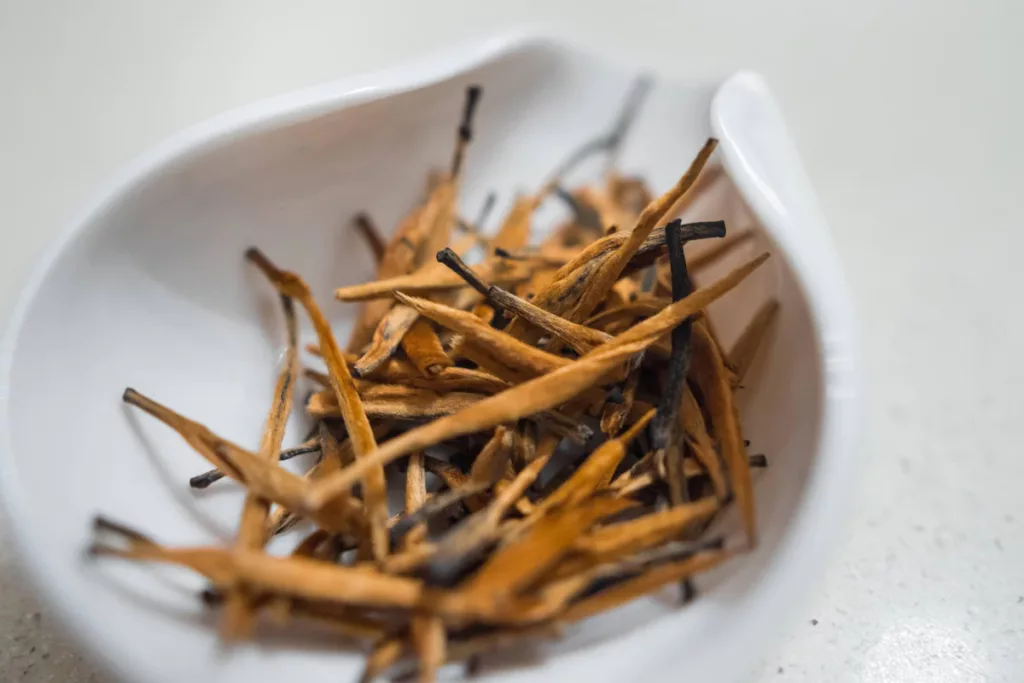
- Tender buds and first leaves for premium teas like Dian Hong or Ceylon tip teas.
- Mature leaves for daily drinking teas.
- Cultivars selected specifically for high aroma and sweetness (e.g., Jin Xuan, Assamica, Yangta cultivars).
Produktionsschritte
- Withering — leaves soften and lose moisture, developing aroma precursors.
- Rolling — bruises the leaf, exposing enzymes and releasing juices.
- Oxidation — the key step; leaves darken from green to red-brown.
- Drying — stops oxidation and locks in the flavour.
- Sorting — by size, shape, and quality (whole leaf, broken leaf, dust/fannings).
For premium hand-made red teas, rolling is often slow and done in small batches to preserve structure.
Alterungsprozess
Red tea can be aged, though it is less common than with white or pu-erh.
With proper storage, 3–5 years can soften tannins and develop fruity, honey-like notes.
Schmecken
Red tea is known for its:
- caramel sweetness,
- maltiness,
- cocoa or honey notes,
- fruity plum or cherry aromas,
- smooth, warm body.
Some high-grade red teas have a slightly minerally or metallic undertone, adding complexity.
Gesundheitliche Auswirkungen
Red tea supports healthy circulation, aids digestion, and contains theaflavins that promote heart health. It is energising but often smoother on the stomach compared to green tea.


 German
  English
  Czech
Czech