


The Making of Tea Series Pt.4
Vorwort des Autors
Pu-erh is not just tea — it is a living organism that keeps evolving long after production. Shen and Shu pu-erh represent two paths: natural aging and accelerated fermentation. In this article I explore the leaves, the transformation, and the deep cultural meaning behind these unique teas.
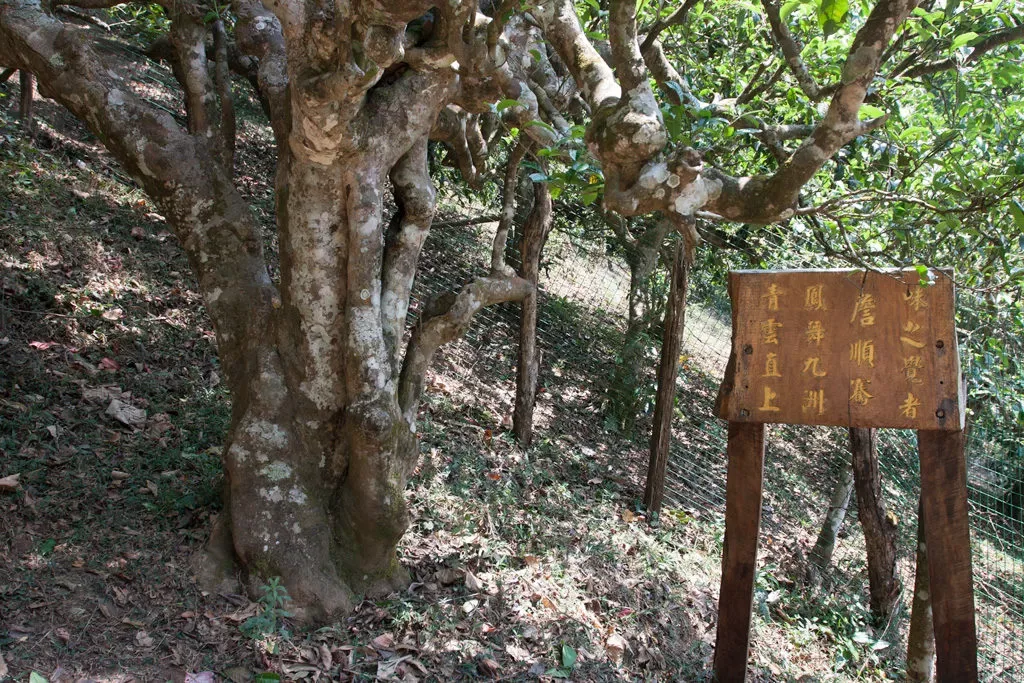
Welche Blätter werden verwendet?
- Old-tree (Gushu) leaves for premium teas.
- Young plantation leaves for commercial batches.
- Thick, robust leaves suitable for fermentation and aging.
Produktionsschritte
Pu-erh is traditionally made from Camellia sinensis var. assamica, the large-leaf tea trees of Yunnan.
Producers use:
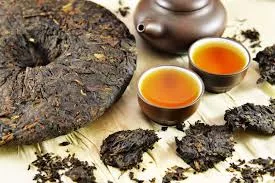
1. Shen Pu-erh (Raw Pu-erh)
- Withering
- Fixing (Kill-green) — lighter than green tea.
- Rolling
- Sun-drying — unique to pu-erh; creates maocha.
- Pressing — into cakes, bricks, mushrooms, etc.
- Aging — natural microbial fermentation over time.
2. Shu Pu-erh (Ripe Pu-erh)
Follows initial sheng steps until maocha, then:
- Wò Duī (Wet Piling) — controlled microbial fermentation under heat and humidity for 30–60 days.
- Turning and monitoring
- Drying
- Pressing
Shu pu-erh is essentially rapid-aged.
Alterungsprozess
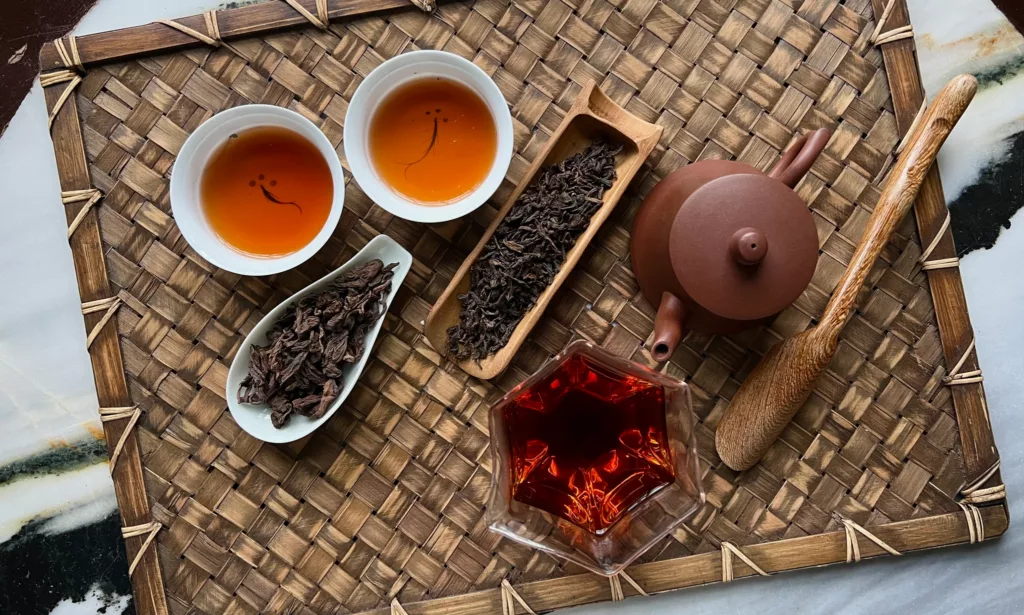
- Shen pu-erh:
- Ages naturally for 10–50 years.
- Flavours evolve from green and sharp to sweet, woody, and deep.
- Shu pu-erh:
- Best after 3–7 years, when post-fermentation stabilizes.
- Smooth, earthy, mellow from early on.
Proper storage (ventilated, dry, odor-free) is crucial.
Schmecken
Shen Pu-erh
- Young: bright, grassy, fruity, astringent.
- Aged: sweet, smooth, woody, incense-like, sometimes “camphor” or “stone-fruit”.
Shu Pu-erh
- Earthy, dark, creamy.
- Notes of wood, dried fruit, cocoa, wet forest, or autumn leaves.
Gesundheitliche Auswirkungen
Pu-erh teas contain microbial metabolites beneficial for digestion, lipid absorption, and gut health.
- Shu pu-erh is especially good for digestion and gentle evening drinking.
- Shen pu-erh boosts energy and clarity, with strong antioxidants and a very unique tea-drunk (chaqi) effect.




 German
  English
  Czech
Czech